BARELY a week after it told retailer Mustafa to stop sales at its warehouse, the Urban Redevelopment Authority (URA) has signalled that it will adopt a more flexible stance on such events.
|
|
 |
The shutters of Mustafa’s warehouse in Kallang Pudding Road were down when The Straits Times paid a visit yesterday evening. — ST PHOTO: SAMUEL HE
|
The authority maintained yesterday that such events are illegal, but added that it might allow them in certain cases, such as when sales are conducted occasionally to clear stock.
It said it would look at the circumstances of each case before deciding whether to take action.
URA did not give specifics but said that among the factors it would consider are whether a warehouse sale would give rise to problems such as traffic congestion and illegal parking.
Last Wednesday, the URA served a writ of summons on Mustafa, ordering it to stop running sales out of its warehouse in Kallang Pudding Road.
Mustafa’s sales were unlike warehouse events elsewhere, in which shoppers trudge through storage areas to pick up bargains. The retail giant had converted the first two levels of its warehouse into a 24-hour department store and a supermarket.
This, URA said, was not allowed because commercial activities are not allowed at warehouse ‘zones’.
Mustafa has since stopped sales at its warehouse.
Such sales held in warehousing districts across the island, although on a smaller scale, have a large following.
Each weekend, throngs of Singaporeans flock to areas such as Tuas, Woodlands, Upper Aljunied and MacPherson to buy everything from mince pies to ice cream. Tour operators even ferry visitors to such events.
Warehouse sales are popular because of the bargains on offer: Distributors can sell products available at supermarkets and other stores for much less because they do not have to incur transport, rental and other costs that retailers do.
One such importer, Fassler Gourmet in Woodlands, opens its doors to walk-in customers daily.
About 60 people swing by each day to pick up cut-price seafood: A 200g packet of Fassler’s smoked salmon, for instance, costs $9.90 at the warehouse and more than $15 at supermarkets.
The company’s main business is selling gourmet produce like frozen lobster bisque soup and salmon sashimi to restaurants, supermarkets and even Singapore Airlines.
Such daily sales are illegal under URA regulations, but owner Martin Fassler, 48, said he has not received any complaints so far.
He admitted, however, that Woodlands Terrace, where the warehouse is located, is a ‘total mess on Saturdays’.
‘We get schools visiting and even community clubs which organise factory visits for their members,’ he said.
Other distributors who stage such public sales from time to time also report that business is good.
Ms Frances Chow, a supervisor at wine distributor Excaliber in Aljunied, said the company holds sales once or twice a year, when there is stock to clear.
But she added: ‘I had no idea it isn’t legal. It is good if URA clarifies its rules.’
Industry experts such as Singapore Retailers Association executive director Lau Chuen Wei and retail consultant Lynda Wee said ad hoc warehouse sales make business sense as distributors need to clear stock every now and then to make way for new goods, or hold a fire sale on products nearing their expiry date.
If they had to rent space to conduct such sales, their costs would be higher. But both experts agreed that those who conduct daily sales out of warehouses enjoy an unfair advantage over regular retailers.
Dr Wee said one key advantage that those who operate out of warehouses have is that they pay much lower rentals.
Added Ms Lau: ‘In land-scarce Singapore, zoning is important so that land use can be priced accordingly.’
Warehouse shopping aficionados, meanwhile, say such sales are a boon.
Accountant Jane Ang, 28, said: ‘You can get much cheaper items at such sales, sometimes up to even 70 per cent off.
‘If it is not a daily occurrence, I think they should be allowed to continue – it works two ways. Retailers get rid of unwanted stock, and we can pick it up cheap.’
Retiree Kuan Kwok Chung, 62, a frequent customer at Fassler Gourmet, is another who hopes the sales can stay.
‘The food is fresher and cheaper than even at wet markets. It is such a service to consumers and is a different experience from supermarket shopping,’ he said.
Source : Straits Times – 11 Nov 2009

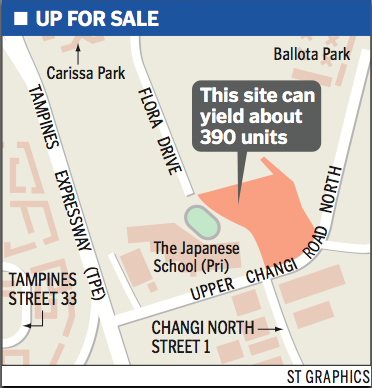 The 3.1ha site, which is not near any MRT station, can be developed into a condominium with about 390 units. Analysts expect fairly strong interest from developers, given the buoyant mass market.


 Lush Dream Home