Tag Archives: Singapore Property Market

Office market here is still active

The vacancy rate in prime Grade A buildings rose from 1.8% in Q3 2008 to 6.1% in Q2 this year

THE office market here, like many around the world, has seen a fundamental shift in dynamics over the last nine months, with a marked drop in demand since the collapse of Lehman Brothers a year ago leading to a drop in rents. While all markets are cyclical, Singapore’s commercial property market has seen rental fluctuations that are typical of a more volatile market such as Hong Kong.
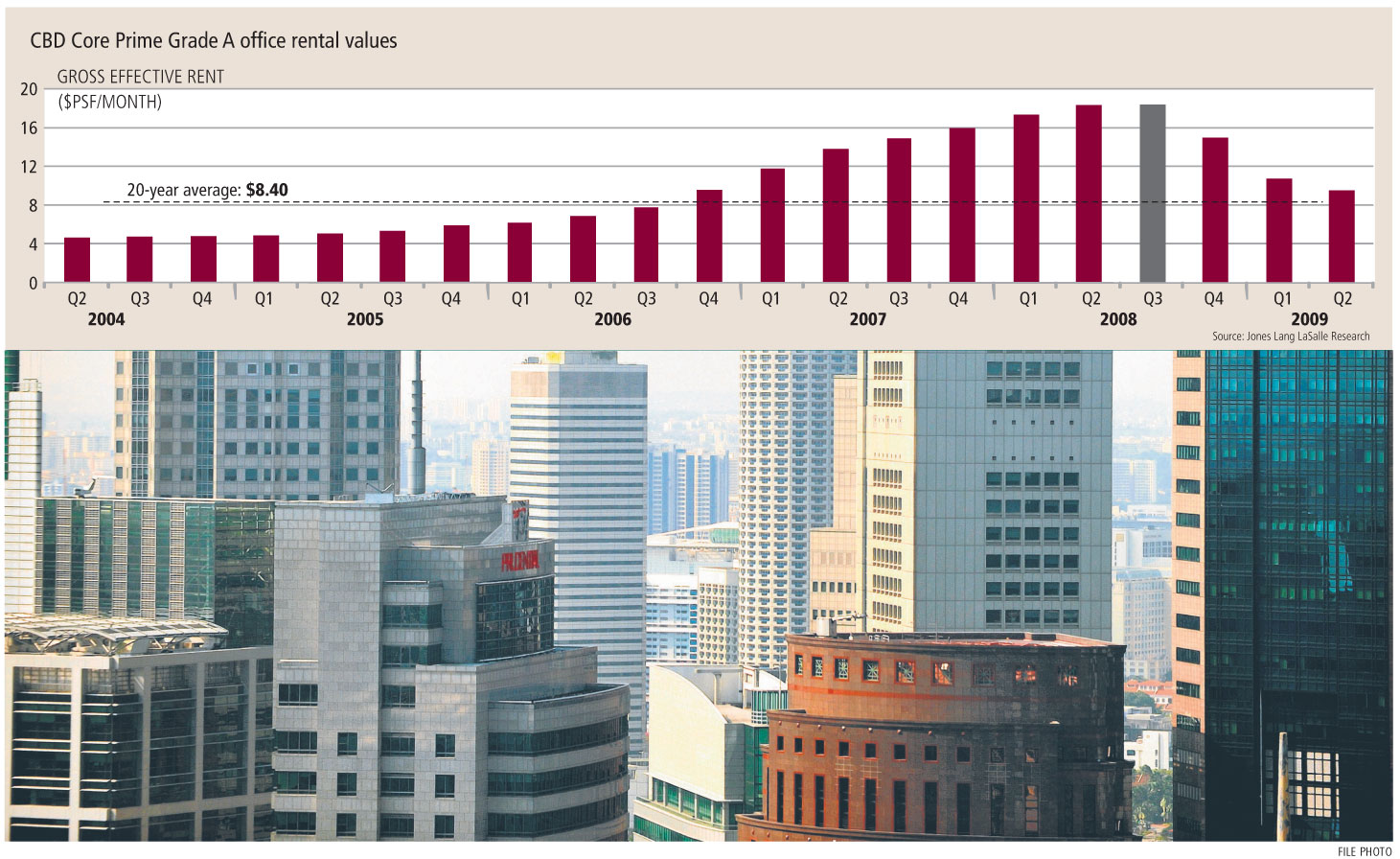
The reason for this is that many new developments were cancelled or delayed during the Asian financial crisis/Sars period in 2002-2004. The typical four-year construction period for a Grade A office building means that there is a lag in the supply pipeline, which was adversely affected from 2006-2008.

These were the years which saw a substantial increase in demand for office space. Much of it came from the financial services sector, partly as a result of the global growth of this sector and partly as a result of Singapore’s successful repositioning as a global financial services centre.

Jones Lang LaSalle’s research shows that from the bottoming out of the market in 2004 to the peak in Q3 2008, Grade A core CBD vacancy shrank from 11.6 per cent to 1.8 per cent and rents surged by 303 per cent. Post credit crisis, the negative take-up and concerns of over-supply have led to rents dropping by 48 per cent between Q3 2008 and Q2 2009. Continue reading

Room for improvement in en bloc laws

The 80 per cent en bloc law made it possible for the private sector to take the lead in maximising the value of scarce land

Chip off the old block: The 1970s saw the introduction of larger scale high-rise condominium housing, with pioneering developments such as Pandan Valley (above). It was also during this period that HUDC started building affordable flats on a large scale for the then ‘sandwiched’ group of middle-income families. Among them were Farrer Court, Pine Grove, Gillman Heights and Laguna Park (next)

COME October, it will be 10 years since en bloc sales became a practical reality with the law that allowed an 80 per cent majority to decide the sale of a development, (90 per cent for those less than 10 years old). Before this, there had to be unanimous consent by owners for the sale of a development. To mitigate the effects of ‘majority rule’, safeguards were put in place to protect the rights of the non-consenting minority owners. The key tenet was that any deal must be entered in good faith.

The new regulations were welcomed by many sellers, in particular those who felt held to ransom by a single dissenter in previous attempts, or who saw the entire exercise scuttled because one owner in the estate was uncontactable.

Since the change in the law, over 270 en bloc developments have been successfully sold. The average value of the deals was close to $100 million per development. This compares starkly to the average of $50 million for the 140 deals that took place from 1994 to 1999, before the law came into effect. While the increase in property prices did contribute to the increase, the ability to maximise development potential and extract value was the major factor. The projects sold under the old 100 per cent rule were typically no larger than 50-80 units.

Without the 80 per cent rule in place, embarking on the exercise for large developments with over 100 units was simply unthinkable. Just the thought of one owner being able to scuttle the deal was enough to deter the owners from slogging through the process. Continue reading