Tag Archives: Mount Elizabeth Novena Hospital

BCA awards for seven buildings for design and safety

Seven buildings have been conferred the Design and Engineering Safety Excellence Awards and merit commendations by the Building and Construction Authority (BCA).

The award recognises engineers for their exemplary design feats and high safety standards in the structural design, construction and maintenance of buildings.

Engineers for the ArtScience Museum were among the winners.

The building, resembling a lotus flower, has a unique three-dimensional structure comprising two levels and 10 petals of varying heights and widths spaced evenly on a radial axis.

The engineers designed a rational and simple way of holding and balancing the structure in space.

Engineers on the National University of Singapore (NUS) Link Bridge project also won the award.

Measuring 274 metres in length, the bridge connects the Kent Ridge campus to University town and spans 10 busy traffic lanes of the Ayer Rajah Expressway (AYE).

The bridge was constructed with pre-cast technology where bridge segments were cast off-site and transported for assembly on-site during off-peak hours.

This enhanced safety and eliminated the need for temporary structures and road closures during the day.

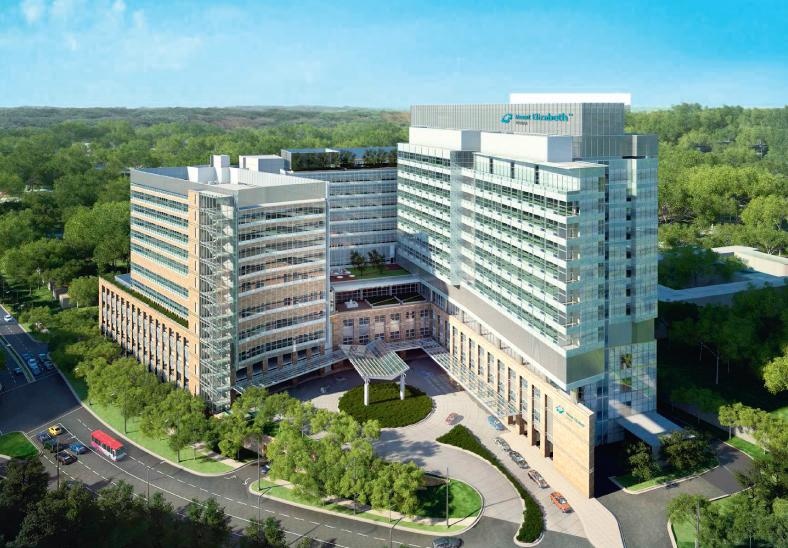
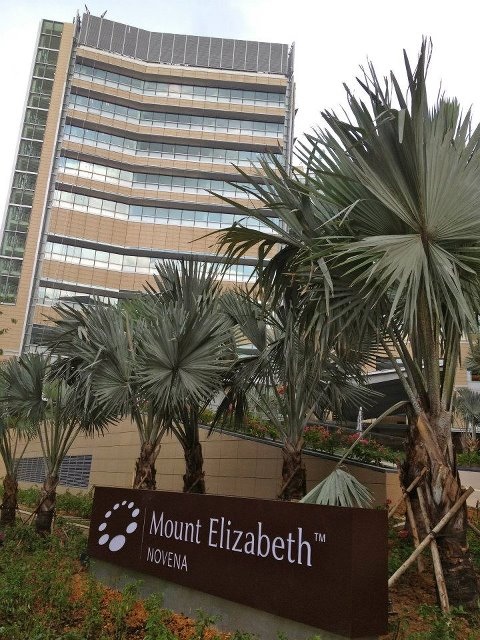
Engineers for two other projects – Mount Elizabeth Novena Hospital, and the Institute of Technical Education (ITE) College Central – were given the award for adopting highly efficient engineering approaches to meet architectural and functional requirements, while enhancing productivity, site safety and quality.

Engineers for three projects were given the merit commendation for Downtown Line Phase 1, Volari at Balmoral Road and The Residences at W Singapore.

Source : CNA – 1 May 2013
Mount Elizabeth Novena Hospital aims to be S’pore’s first “hospitel”

20120622-224802.jpg

20120622-224754.jpg

Singapore’s first “hospitel” will open on 1 July.

Operating as a hospital but designed like a hotel, Mount Elizabeth Novena Hospital (MNH) aims to be the hospital of the future.

From well-dressed staff at the concierge to carpeted corridors, patients are pampered into feeling like they have entered a hotel.

The windows and doors were also built for better soundproofing.

90 per cent of falls in hospital occur when patients visit the toilet.

To address this problem, toilets were designed to be as close as possible to the beds.

MNH is also the only hospital in Singapore that is bomb-proof and the only one to offer only single-bedded rooms.

A basic room will set you back by about S$600 a night.

Medical equipment is hidden out of sight and rooms are well-stocked for maximum comfort.

Pay for an upgrade and you and your family can stay at MNH like a king.

There’s even a smart toilet.

But those with loads of cash can opt for the Chairman Suite, costing almost S$13,000 per night.

Dr Lee Hong Huei, CEO, Mount Elizabeth Novena Hospital, said: “The thinking behind this is we try to import some of the ideas from the hospitality industry into the hospital environment. I think consumers are getting a bit more intelligent and more demanding. So when they look for healthcare services, certainly they look for effective healthcare, but at the same time they are also looking for the quality of the service.”

Apart from the interior design, the hospital has also invested in top-notch medical technology.

A Biograph mMR machine combines both MRI and PET scans and is the first in Asia while the sophisticated Hybrid Operating Theatre allows surgeons to perform more complex procedures.

The latest LED lights in the theatre are also shadow and heat-free, increasing the accuracy of the surgeon’s procedures.

The new hospital is located in Novena, Singapore’s premier medical hub.

Built by Parkway Pantai Group, a leading healthcare group based in Singapore, the hospital aims to attract medical tourists to Singapore.

The Group operates 16 hospitals across Asia, including Gleneagles Hospital in Singapore. And, key markets are Indonesia, Malaysia, India and China.

Dr Lee said: “In terms of the patient distribution, we do expect about 50 per cent of our patients to come from overseas, which is close to what we’re currently experiencing in the other facilities. The other 50 per cent will probably be made out of locals and residents of Singapore.”

Source : CNA – 2012 Jun 22